Many people start GLP-1 medications expecting changes in appetite, but few expect how challenging eating can become when food simply stops sounding appealing. If you've found yourself thinking, "I know I should eat, but I really don't want to," you're not alone. Learning how to eat on GLP-1s when you're not hungry is one of the most common challenges people face during treatment.
Reduced appetite can be a welcome change for those working toward weight loss goals, but it can also create new questions about nutrition, energy levels, and meeting basic dietary needs. The good news is that eating well on GLP-1 therapy does not require forcing large meals or following a rigid diet plan. It often comes down to making smart food choices, prioritizing nutrition, and finding strategies that work with your body's changing signals.
How to Eat on GLP-1s When You're Not Hungry: Quick Answer
If you're taking a GLP-1 medication and struggling with low appetite, focus on small, protein-rich meals, hydration, and nutrient-dense foods. Eating smaller portions more frequently, choosing foods that are easy to tolerate, and working with your healthcare provider can help support nutrition even when hunger cues are reduced.
Why GLP-1s Affect Appetite and How to Think About It
GLP-1 medications are designed to mimic a naturally occurring hormone involved in blood sugar regulation and appetite control. One reason these medications are effective for weight management is that they help people feel fuller sooner and stay satisfied longer.
For many patients, this reduced hunger is a positive change. However, appetite suppression can sometimes become so noticeable that eating begins to feel like a chore rather than something enjoyable.
Feeling Less Hungry Is Expected
A lower appetite does not necessarily mean something is wrong. In many cases, it indicates the medication is working as intended.
Common experiences include:
- Feeling full after just a few bites
- Going longer between meals without hunger
- Reduced interest in favorite foods
- Smaller portion sizes
- Less frequent snacking
The challenge is making sure these changes do not lead to consistently under-consuming important nutrients.
Why Under-Eating Can Become a Problem
Online communities, including many discussions on Reddit, often feature people asking whether they're "messing up" by barely eating while taking GLP-1 medications.
While temporary reductions in food intake can happen, consistently eating too little may contribute to:
- Fatigue
- Reduced exercise performance
- Muscle loss
- Nutrient deficiencies
- Increased weakness or dizziness
- Difficulty maintaining healthy habits long term
The goal is not simply eating less. The goal is supporting overall health while working toward weight management objectives.
Personalized Compounded GLP-1
Looking for Semaglutide or Tirzepatide? Start your free assessment now!
How to Eat on GLP-1s When You're Not Hungry
When appetite is low, quality often matters more than quantity.
Instead of focusing on large meals, focus on getting the most nutritional value from smaller portions.
Prioritize Protein First
Protein is often one of the most important nutrients to focus on during GLP-1 treatment.
Protein helps support:
- Muscle maintenance
- Recovery from exercise
- Satiety
- Healthy aging
- Overall metabolic health
When eating feels difficult, many people find it helpful to start with protein before anything else.
Examples include:
- Greek yogurt
- Cottage cheese
- Eggs
- Protein shakes
- Chicken breast
- Turkey
- Fish
- Tofu
- Edamame
Even a small serving can provide meaningful nutritional value.
Think Nutrient Density Instead of Meal Size
A small meal can still be highly nutritious.
Rather than trying to force large portions, focus on foods that deliver substantial nutrition in a smaller volume.
| Lower Priority Choice | Higher Nutrient-Dense Choice |
|---|---|
| Crackers alone | Greek yogurt with fruit |
| Plain toast | Eggs on whole grain toast |
| Chips | Edamame |
| Sugary cereal | Protein oatmeal |
| Candy | Nuts and fruit |
The goal is maximizing nutrition without increasing meal size unnecessarily.
Use Smaller, More Frequent Meals
Traditional meal schedules do not work for everyone on GLP-1 therapy.
Some people feel better eating:
- Half a sandwich now and the other half later
- A protein shake in the morning
- A small lunch
- A light afternoon snack
- A modest dinner
This approach may feel more manageable than trying to eat three large meals each day.
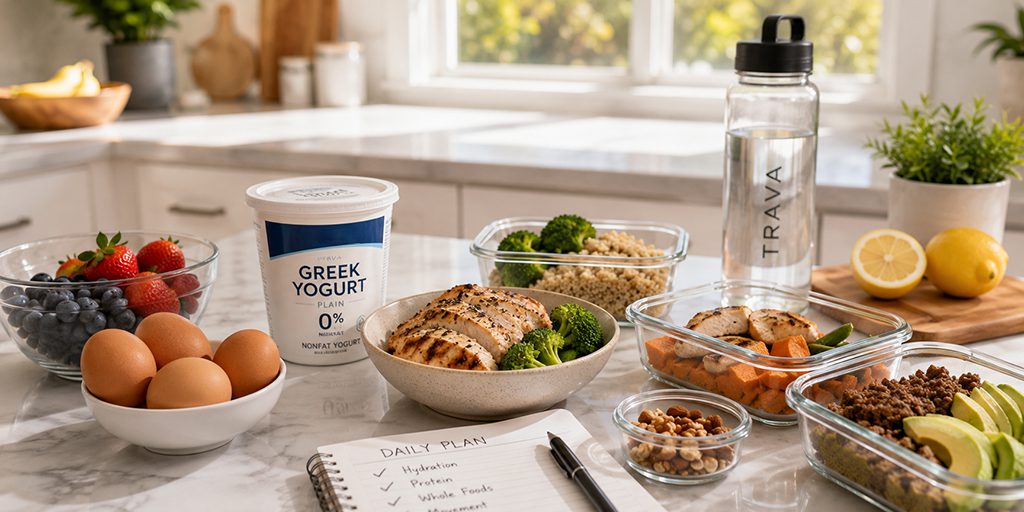
Simple Meal Patterns for Low-Appetite Days
Some days will be easier than others. Having a few simple meal ideas available can help remove decision fatigue.
Breakfast Options
When mornings feel difficult:
- Greek yogurt with berries
- Protein smoothie
- Scrambled eggs
- Cottage cheese with fruit
- Protein oatmeal
These options are relatively easy to prepare and typically provide protein without requiring a large volume of food.
Lunch Options
Midday meals can stay simple.
Consider:
- Turkey roll-ups
- Grilled chicken and vegetables
- Tuna salad
- Protein-focused soup
- Small rice bowl with lean protein
The objective is consistency, not perfection.
Dinner Options
Many people experience stronger appetite suppression later in the day.
Simple choices may include:
- Salmon and vegetables
- Rotisserie chicken and salad
- Lean ground turkey bowl
- Tofu stir-fry
- Shrimp and rice
Smaller portions are perfectly reasonable if they contain meaningful nutrition.
When a Protein Shake Makes Sense
Sometimes solid food simply does not sound appealing.
A high-quality protein shake can serve as a practical option when:
- Nausea is present
- Appetite is extremely low
- Time is limited
- Recovery nutrition is needed after exercise
While shakes should not replace every meal, they can help bridge occasional nutritional gaps.
Managing Nausea and Food Aversions
Low appetite and nausea often overlap during the early stages of GLP-1 treatment or after dose adjustments.
The experience varies significantly from person to person.
Foods That May Feel Easier to Tolerate
Many people find these options gentler on the stomach:
- Crackers with protein
- Toast
- Rice
- Applesauce
- Bananas
- Broth-based soups
- Greek yogurt
- Plain chicken
- Smoothies
Individual preferences vary, so gentle experimentation is often necessary.
Stay Ahead of Hydration
Hydration can become surprisingly important when appetite decreases.
Dehydration may sometimes worsen:
- Fatigue
- Headaches
- Dizziness
- Nausea
Helpful hydration strategies include:
- Keeping a water bottle nearby
- Drinking regularly throughout the day
- Using electrolyte beverages when appropriate
- Consuming water-rich foods such as fruits and soups
Small, consistent hydration habits are often easier than trying to drink large amounts all at once.
Give Yourself Permission to Experiment
One of the most important things to remember is that food preferences may temporarily change.
Foods you loved before treatment may suddenly feel unappealing. Other foods may become easier to tolerate.
Rather than forcing foods that trigger aversion, consider exploring different:
- Textures
- Temperatures
- Flavors
- Protein sources
- Meal timings
This flexible approach often leads to more sustainable habits.

How Trava Helps Troubleshoot Nausea and Nutrition Questions
Nutrition challenges during GLP-1 treatment rarely have a one-size-fits-all solution.
What works for one person may not work for another.
At Trava, conversations around nutrition focus on practical strategies that fit real life rather than rigid meal plans. Providers can help patients understand common side effects, identify nutritional priorities, and adjust routines when appetite changes make eating more difficult.
Support may include discussions around:
- Protein intake
- Hydration habits
- Meal timing
- Appetite changes
- Recovery needs
- Managing nausea
- Long-term sustainability
The goal is helping patients navigate treatment confidently while supporting overall wellness.
Frequently Asked Questions
Is it normal to barely feel hungry on GLP-1 medications?
Yes. Reduced appetite is one of the most common effects of GLP-1 medications. Many people notice they feel full sooner, stay satisfied longer, and think less about food. However, it's still important to prioritize nutrition and hydration even when hunger signals decrease.
What should I eat first if I can only tolerate a small amount of food?
Protein is often a smart place to start. Foods such as Greek yogurt, eggs, cottage cheese, lean meats, or protein shakes can help support muscle maintenance and overall nutrition when appetite is low.
Can I lose muscle if I do not eat enough on GLP-1s?
Potentially. Significant reductions in food intake, especially protein intake, may contribute to muscle loss over time. Maintaining adequate protein and engaging in resistance training can help support lean body mass during weight loss.
Why do some foods suddenly sound unappealing on GLP-1 medications?
GLP-1 medications can alter hunger cues, fullness signals, and food preferences. Many people notice changes in cravings, taste preferences, and interest in certain foods. These experiences are generally individual and may change throughout treatment.
Should I force myself to eat if I'm not hungry?
Rather than forcing large meals, focus on smaller portions of nutrient-dense foods throughout the day. If appetite suppression becomes severe or you struggle to meet basic nutrition needs, speak with your healthcare provider for personalized guidance.
Conclusion
Learning how to eat on GLP-1s when you're not hungry often requires a shift in mindset. Instead of focusing on eating large meals, focus on nutrition quality, protein intake, hydration, and consistency.
Appetite suppression is a common part of the GLP-1 experience, but it does not mean nutrition has to take a back seat. Small, intentional choices can help support your wellness goals while making eating feel more manageable.
If you're looking for guidance that goes beyond generic meal plans, Trava offers provider-guided support designed to help you navigate nutrition, side effects, and long-term success with your GLP-1 program.
Disclaimer: TRAVA is not affiliated with, Mounjaro, Ozempic, Rybelsus, Saxenda, Trulicity, Wegovy, or Zepbound. However, we do offer alternatives such as Semaglutide and Tirzepatide. Before beginning any treatment, it's essential to consult with a licensed healthcare provider to ensure the best approach for your individual health needs.